Product path
Roadmap
What you can use now and what TypeFuel has to earn through validation.
Detection first, recommendations second. The app starts with baseline building, then earns stronger guidance through evidence.
What does the Research Preview include?
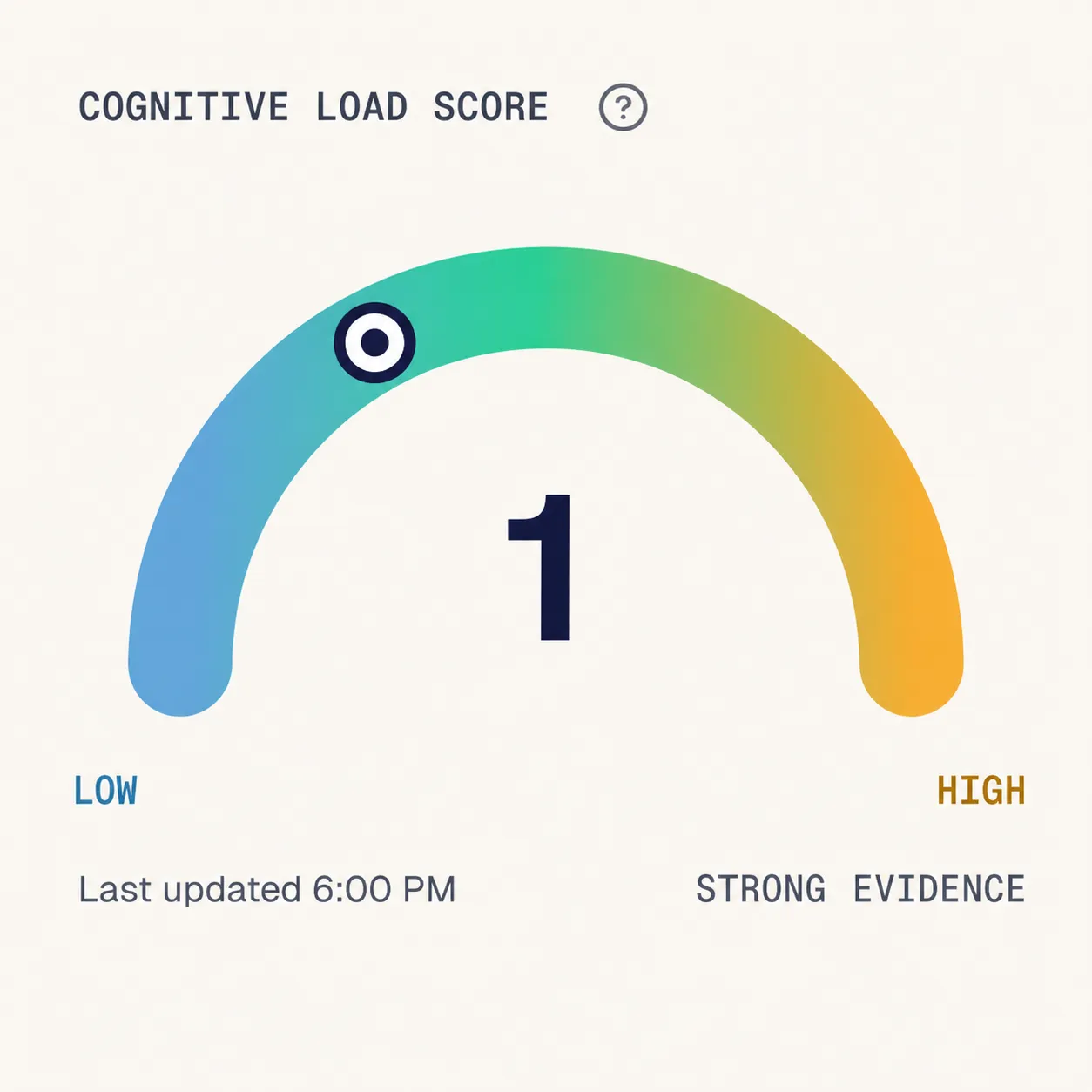
TypeFuel's Research Preview is a private desktop app for Mac and Windows. It starts with onboarding, baseline building, and a conservative cognitive load gauge. The preview tests whether cognitive load at the computer can be detected from work rhythm, keyboard timing, correction patterns, and personal baselines. A validated v1.0 score arrives only if the Research Preview meets the methodology thresholds with real passive signal data. The roadmap deliberately keeps recommendations, integrations, and coaching secondary until detection is earned. That means participants first help answer the core research question: whether a private work-load signal can be useful without reading work content or asking people to wear another device.
What has to be validated before v1.0?
TypeFuel leaves preview only if the signal meets the methodology gates: enough passive timing data, meaningful cohort stability, calibration that holds beyond one person, and robustness across different typing speeds and work styles. If those gates fail, the roadmap stays in Research Preview. We will keep publishing what the signal gets right, where it fails, and what evidence is still missing before any public validated-score claim.
How does the preview expand?
The preview stays intentionally staged. Current participants help test onboarding, keyboard permission setup, baseline building, and whether the learning gauge is understandable before it makes stronger claims. Later cohorts help pressure-test the same cognitive load tracker across more work styles, including coding, writing, design, analysis, operations, and deep work. That pacing keeps the product honest: participants should know what is being tested, what evidence is still missing, and why the app starts with learning before guidance.
-
Research Preview
Participants get the desktop app, passive rhythm capture, and a personal baseline view. The gauge starts by learning. A validated load score is not promised.
Preview install: download the app, review the data boundary, and start building a baseline. Read The Deal ->
-
Detection (v1.0)
TypeFuel leaves preview only if the signal meets the validation criteria. The goal is local detection with clear limitations.
Gate: enough timing data, meaningful cohort stability, and consistency across work styles. Full criteria ->
-
Recommendations and integrations
Detection first. Recommendations later. Calendar awareness, focus-mode handoff, and integrations are possible only after the core signal earns trust.
Install TypeFuel
Download the desktop Research Preview.
Start building your personal baseline today. Download the macOS or Windows Research Preview installer.
- No wearable
- No typed content
- Personal baseline
- Free during Research Preview